
marginalia
notes on the four books I read in April + what I'm reading next

“In the marginalia … we talk only to ourselves; we therefore talk freshly — boldly — originally — with abandonment — without conceit.”1
I read four books in April, all of them intensely thought provoking on all different levels: dealing with war, murder, retribution, morality, social justice, identity and immigration, poverty and childhood. It was a good month, because I love books that make me think deeply, that make me want to talk about and digest and discuss these issues with anyone around that will listen.
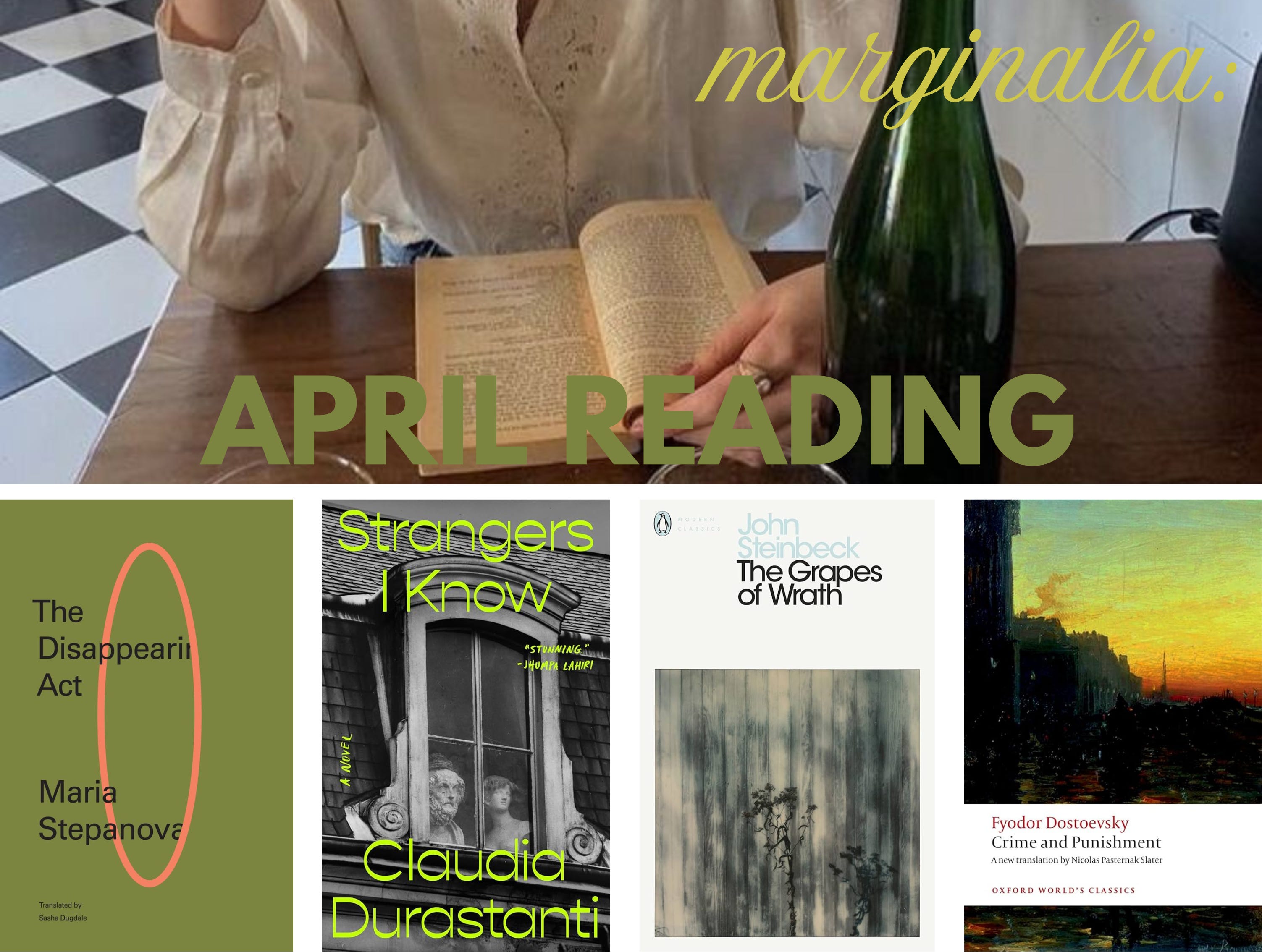
I think one of the most lovely things about consistently reading over the years is that you begin to hone in on your taste in reading, you begin to be able to select the books that you know you will love and enjoy. In the past year, I don’t think I had a single book that I needed to DNF (did not finish), simply because I’m better at knowing what I like!
All this to say, if you want to read more but are getting discouraged picking up books that you don’t like, soldier on! Reading a wide variety helps you both find what you like and don’t like, and both are equally important. Not to say that you shouldn’t challenge yourself, but life is too short to not love what you read!
Here is everything I read in April, with some notes from my reading notebook.
The Grapes of Wrath, John Steinbeck // loved it
I had my grandfather’s copy of this book already on my bookshelf, but had never read it, and you may remember one of my reading intentions this year was to incorporate more classic novels in my TBR. It felt wonderful to revisit Steinbeck’s writing again, which had left such an impression on me from my teenage years reading Of Mice and Men, The Red Pony, and The Pearl.
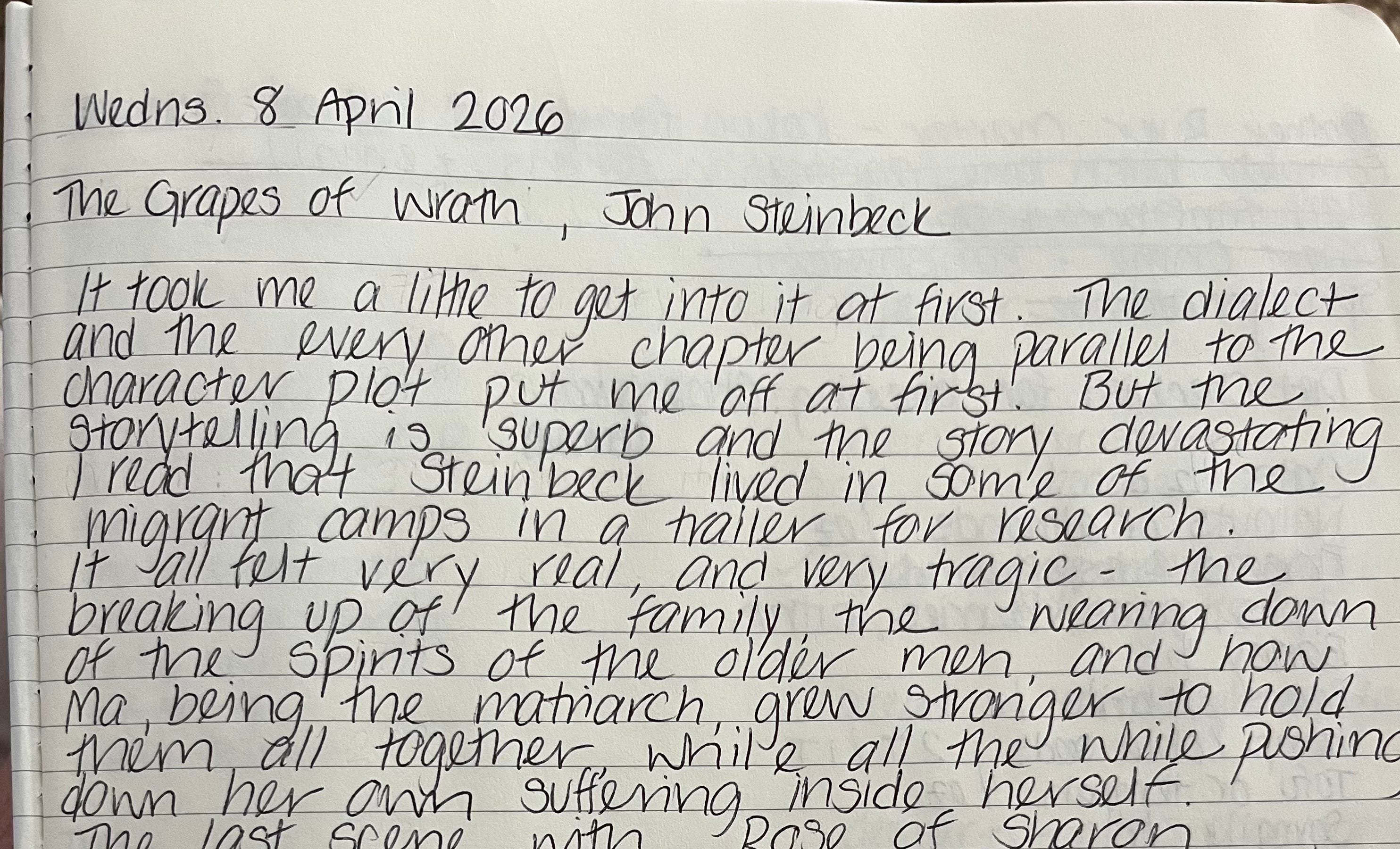
I was deeply moved by the story of a migrant family and their struggles during the Dust Bowl. The themes still feel so relevant today: society’s failure to care for its most vulnerable, human greed and corruption, oppression, and exploitation of the earth’s natural resources.
Crime and Punishment, Fyodr Dostoevsky // obsessed with it
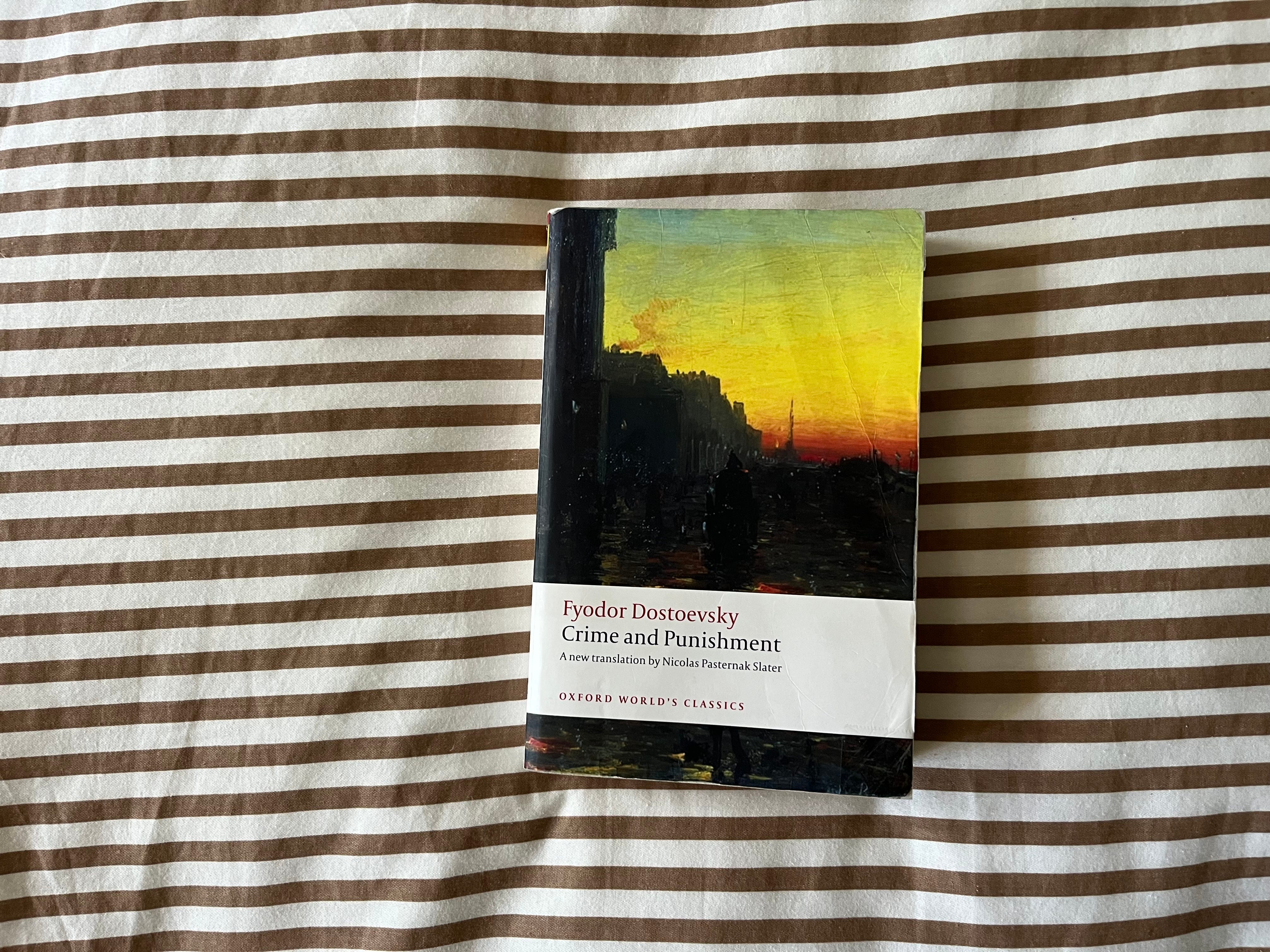
Continuing with my quest to read the classics, I picked up a used copy of Crime and Punishment, my first Dostoevsky. A tale of murder and retribution set in St. Petersburg, and told with black humor and thrilling psychological suspense, this book had me hooked from the first few pages.
The depth of the characters and the writing is superb, and it has you rooting for the main character even though he’s technically the villain, and you hate him at times. What an incredible work!
Strangers I Know, Claudia Durastanti // liked it
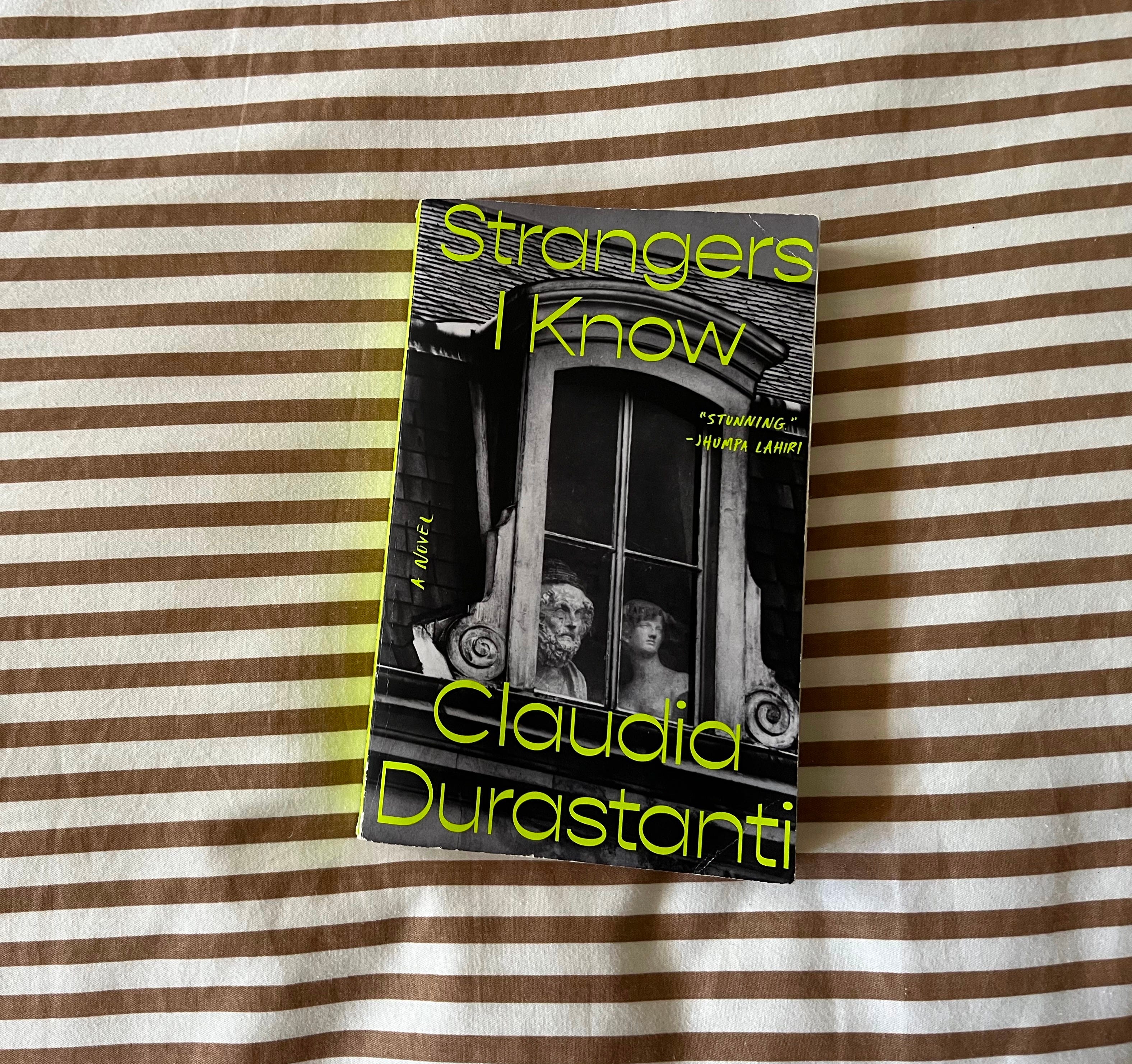
I was really excited to read this book, and went into it expecting more of a novel. It is autobiographical fiction, though, of a girl growing up in poverty with deaf parents who are at times, stubborn, narcisstic, unavailable emotionally. The story straddles both the US and Italy, and the sense of split identity from that.
I loved the way she writes, it felt a bit like Joan Didion with her cold, removed, hard as glass dissections of life. Instead of following a predictable course in telling the story of her family, the text is unpredictable and shifts through time in little vignettes. It also reminded me of another book about growing up with neglectful parents, Sarah Manguso’s Very Cold People. I really quite enjoyed that it shares the realities of poverty and disabilities in a very matter of fact way that feels very human—and that its portrayal of Italy has zero romanticizing.
In the end, I enjoyed this one, although I did feel a bit conflicted. Some parts in the second half of the book, I felt a bit lost by, in that it felt a little overly analytical. Many parts, though, felt profound and moving, and the story overall was so deeply vulnerable and a beautiful exploration of family and identity.
The Dissappearing Act, Maria Stepanova // liked it
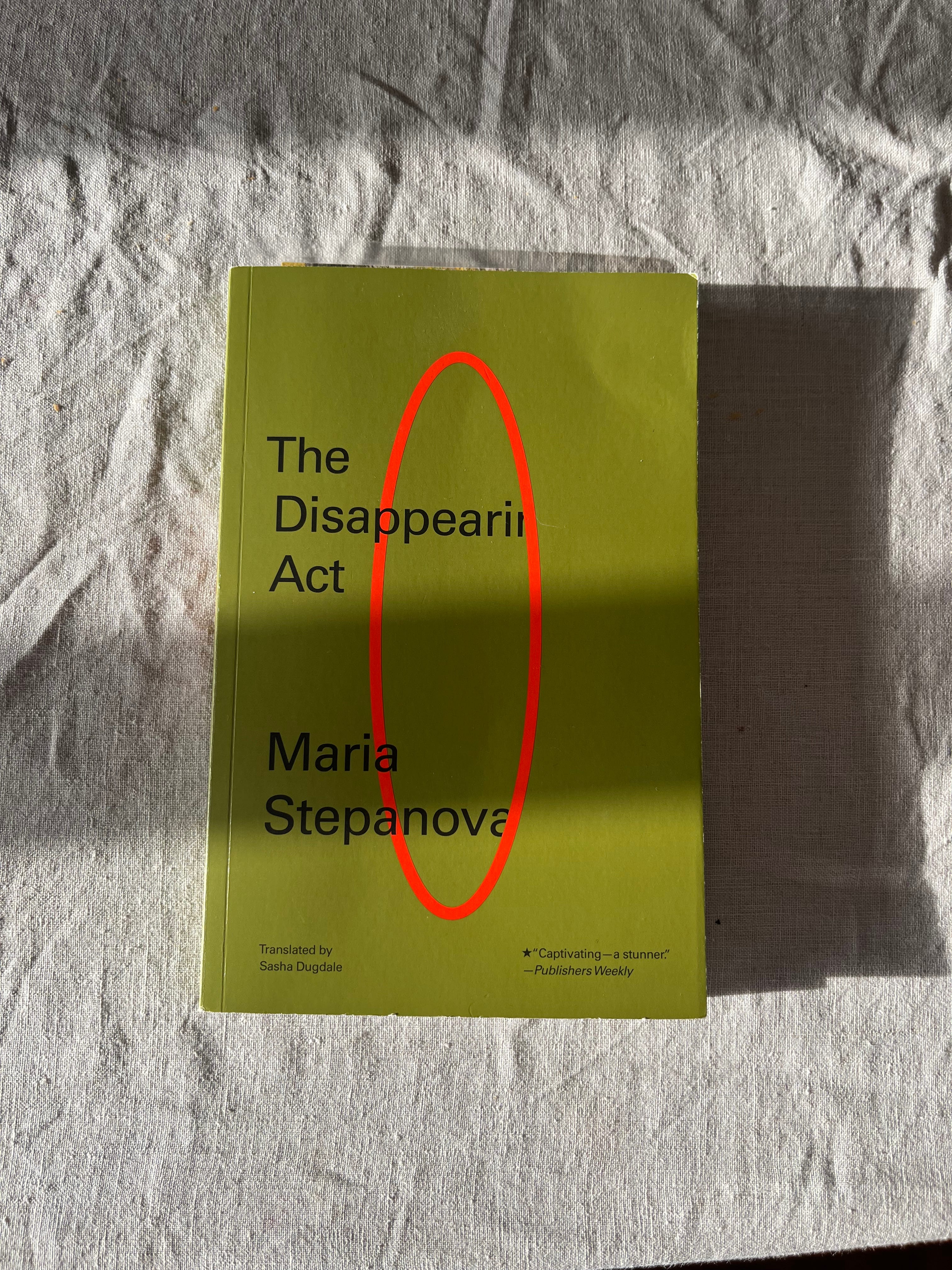
This was a very slim book lent to me by a friend. I loved the way Stepanova writes in a meditative pace, with rich prose and attention to detail, while also keeping other things vague or hazy—our narrator is simply named as M., and the place and season is unnamed, barely implied. It’s a story that toys with the reader as it unfolds.
M. is a novelist in exile from her home country, which is waging war and invading a neighboring country: a “beast . . . consuming everyone”. Towards the end of the novel, we find out M. is Russian, although Ukraine is never mentioned, an omission which seems deliberate, perhaps commenting on erasure. Identity and immigration continually come up and are explored, “Where are you from? … But, where are you really from?” she is asked over and over in her travels.
At first, parts of this book went over my head and I felt that it hard to connect with, which I think was deliberate, and it was nebulous towards the end, hard to focus on and figure out what was happening—hazy and dreamy. In the weeks following my read, I thought of it often and re-read parts, and only then did I begin to understand the story on a deeper level.
It’s skillfully written, and has so many layers—an important book, but one that definitely requires lots of thought and reflection to fully grasp, I think.
Up Next:
The Post Office Girl, Stefan Zweig.
I have had this German author on my list forever and am finally getting around to it. Very excited! Have you read him before?
I’m also looking forward to summer reading and hope to share some another summer reading list at the beginning of June. In the meantime, here’s my first one, which has a lot of my favorites on it:
I’d love if you shared in the comments what books you’ve been loving lately and why? I always enjoy hearing your thoughts. Word of mouth recommendations are the best!
Thank you so much for reading. If you can’t swing a paid subscription right now, I’m always delighted to receive a one-off tip via my ko-fi—thank you! I appreciate you all so much.
See you on Saturday.
x A.
Edgar Allan Poe
I recently finished Mongrel by Hanako Footman. It’s the kind of quietly devastating story that sneaks up on you, in very lyrical prose. I took a little while to get in to the rhythm of the writing, but once I did I couldn’t put it down.
I’m currently reading East West Street: on Origins of Genocide and Crimes Against Humanity by Phillips Sands. Relevant to our times for many reasons, and also well written (I heard the author interviewed and he’s incredibly eloquent {makes sense as a human rights barrister!}, so I guess it’s no surprise his writing is too).
Some other recent reads I loved were Birnam Wood by Eleanor Catton and Martyr! by Kaveh Akbar. Both astonishing (in different ways) storytelling.
Currently re-reading The Burglary and it is incredible. I feel like it should be required reading for Americans. Non-fiction, but reads like a fascinating story and (sadly) many parallels to today.
Some all time favs:
Just Kids by Patti Smith
Braiding Sweetgrass by Robin Wall Kimmerer
The Bell Jar by Sylvia Plath
The Heart is a Lonely Hunter by Carson McCullers
Tracks by Robyn Davidson
Never Let Me Go by Kazuo Ishiguro
The Spy and the Traitor by Ben Macintyre
The Wind Up Bird Chronicle by Murakami
And for fun, Arsene Lupin by Maurice Leblanc
Plus MANY herbalism books :)